Reuse
Keep working items in use through sharing, redeployment, or community reuse.
View pathwayRecovery pathways platform
SheRecycles connects people to reuse, repair, donate, resell, trade-in and recycling pathways while helping partners understand how recovery systems are actually used.
Start here
Start with the product, then choose the pathway that keeps the most value in use before recycling becomes the last step.
Interactive pathway tool coming soon in the future PWA. Phase 1 keeps these categories stable so the PWA can connect later.
Recovery Pathways
SheRecycles makes recycling one option in a wider circular pathway, not the only answer.
Keep working items in use through sharing, redeployment, or community reuse.
View pathwayFix items that still have value before replacing or recycling them.
View pathwayMove usable items to charities, schools, community groups, or people who need them.
View pathwayRecover value through resale, refurbished markets, or second-hand platforms.
View pathwayUse retailer, brand, or producer schemes when take-back or credit is available.
View pathwayUse verified drop-off or specialist recovery points when higher-value options are not suitable.
View pathwayRecovery Map
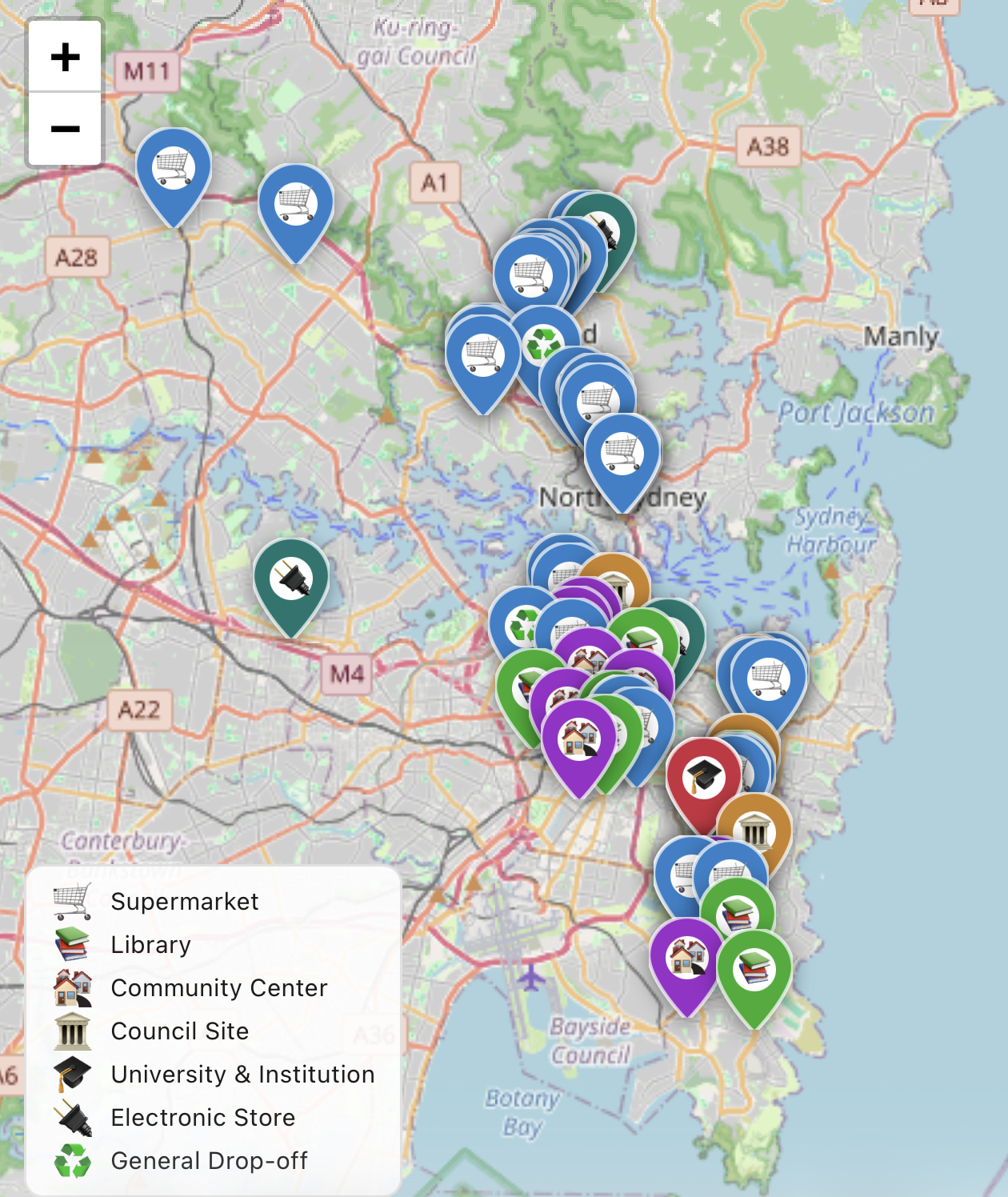
The existing recovery map remains a core product layer. Phase 1 positions it as part of a broader pathway journey, with future PWA filters planned around item type, access, opening hours, site type and accepted items.
Recovery intelligence
Since March 2026, SheRecycles pilot observations have mapped 70+ recovery points and documented visibility, access, signage, staff awareness and accepted-item uncertainty across supermarkets, libraries, councils, retail and campus environments.
Read insightsPartners
Phase 1 uses careful partner language until formal partnerships and logo permissions are confirmed.
Help public places understand whether recovery points are easy to find, use and trust.
Make it easier for people to choose the right next step before materials become waste.
Support better take-back, trade-in and post-use participation for clean-tech products.
Featured event
Thursday 23 July 2026 at UNSW Founders, Michael Crouch Innovation Centre, Kensington. 5:30 PM arrival; 6:00 PM to 8:00 PM panel.
Get involved
Students, researchers, councils, campuses, repairers, recyclers, brands and community members can each support a different part of the recovery system.
Visit recovery points and document visibility, signage, access and usability.
Start mappingTurn early field observations into careful recovery intelligence, explainers and briefs.
Explore researchConnect repair, resale, trade-in, donation and recycling options into clearer public journeys.
Partner with usSheRecycles